Residential · Air-Seal First
Attic insulation in Winnipeg
Direct answer
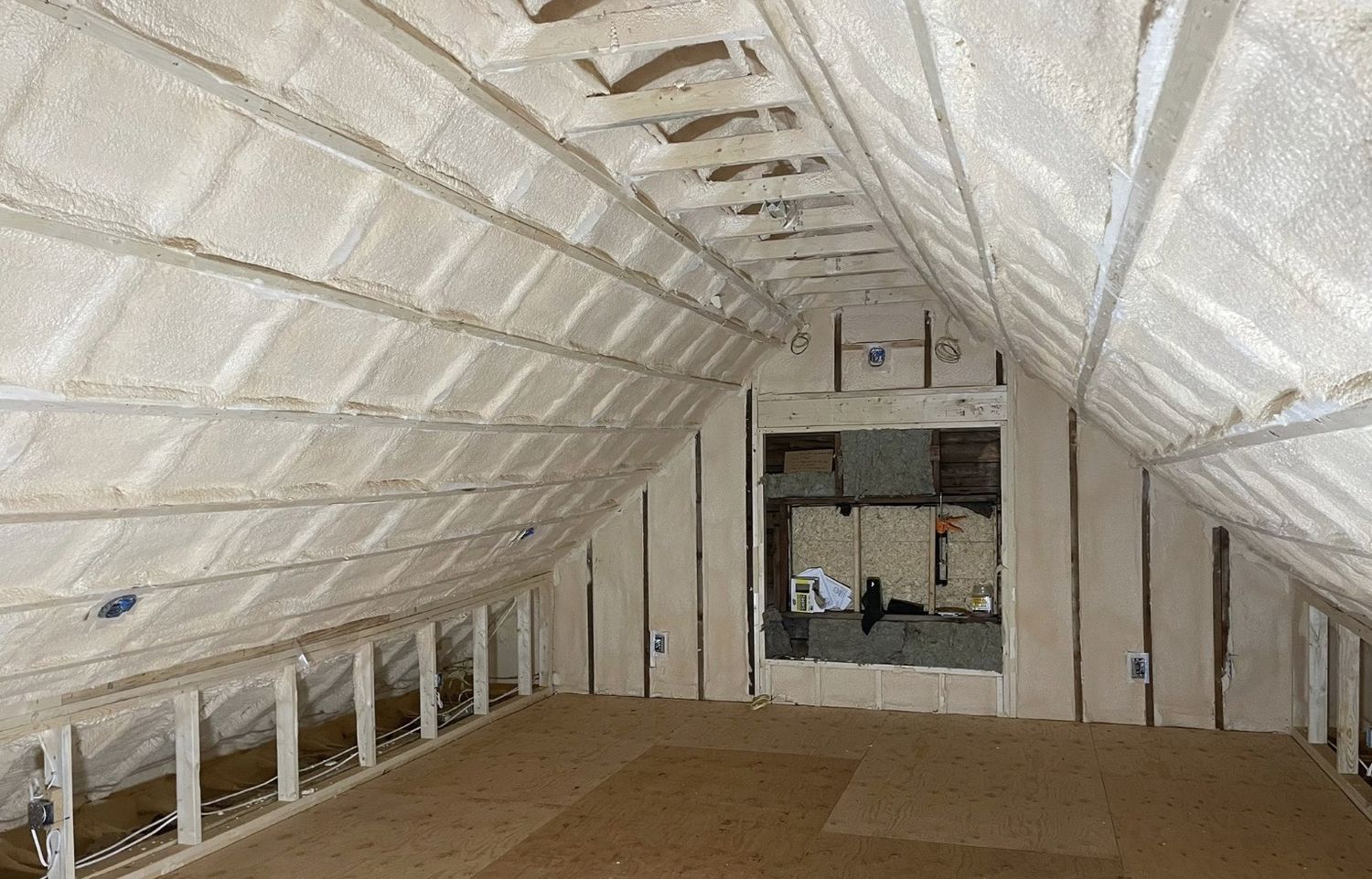
The right attic upgrade in Winnipeg happens in a specific order: air-seal the ceiling plane first, then insulate to R-50. Most icicle-covered eavestroughs and frost-lined attics trace back to warm air leaking through ceiling penetrations, not just thin insulation. Ecologic air-seals the plane with closed-cell spray foam, tops up to R-50 in the way that makes economic sense for your attic, keeps the ventilation path clear, and handles the Efficiency Manitoba rebate (currently $0.03 per ft² per R added; pre-approval required).
Sources: NBC 2020 9.36 · efficiencymb.ca (rates verified July 2026)
01 Diagnosis
Icicles are a heat leak you can see from the street.
Every ice dam is the same physics: heat escapes into the attic, warms the roof deck, melts the snow from below. The meltwater runs down to the eaves, which hang past the warm envelope and stay at air temperature, and refreezes into a growing dam. Water pools behind it and finds its way under shingles, into soffits, down wall cavities.
The heat gets up there two ways, and their shares surprise people: air leakage through the ceiling plane (pot lights, bath fans, the attic hatch, plumbing stacks, wire penetrations, interior wall top plates) typically moves more heat than conduction through thin insulation. Which is why the classic Winnipeg move of "blow in more insulation" over a leaky ceiling so often disappoints: the warm air just tunnels through.
Fix the cause: seal the plane, then insulate deep, and keep soffit-to-ridge ventilation clear so the roof deck stays cold. The three steps work together. Skip one and the other two underperform.
02 The system
Air-seal with foam. Insulate to R-50. Ventilate cold.
We use each material where it's strongest, including telling you when spray foam is not the economical fill for an open attic.
Inspect and measure
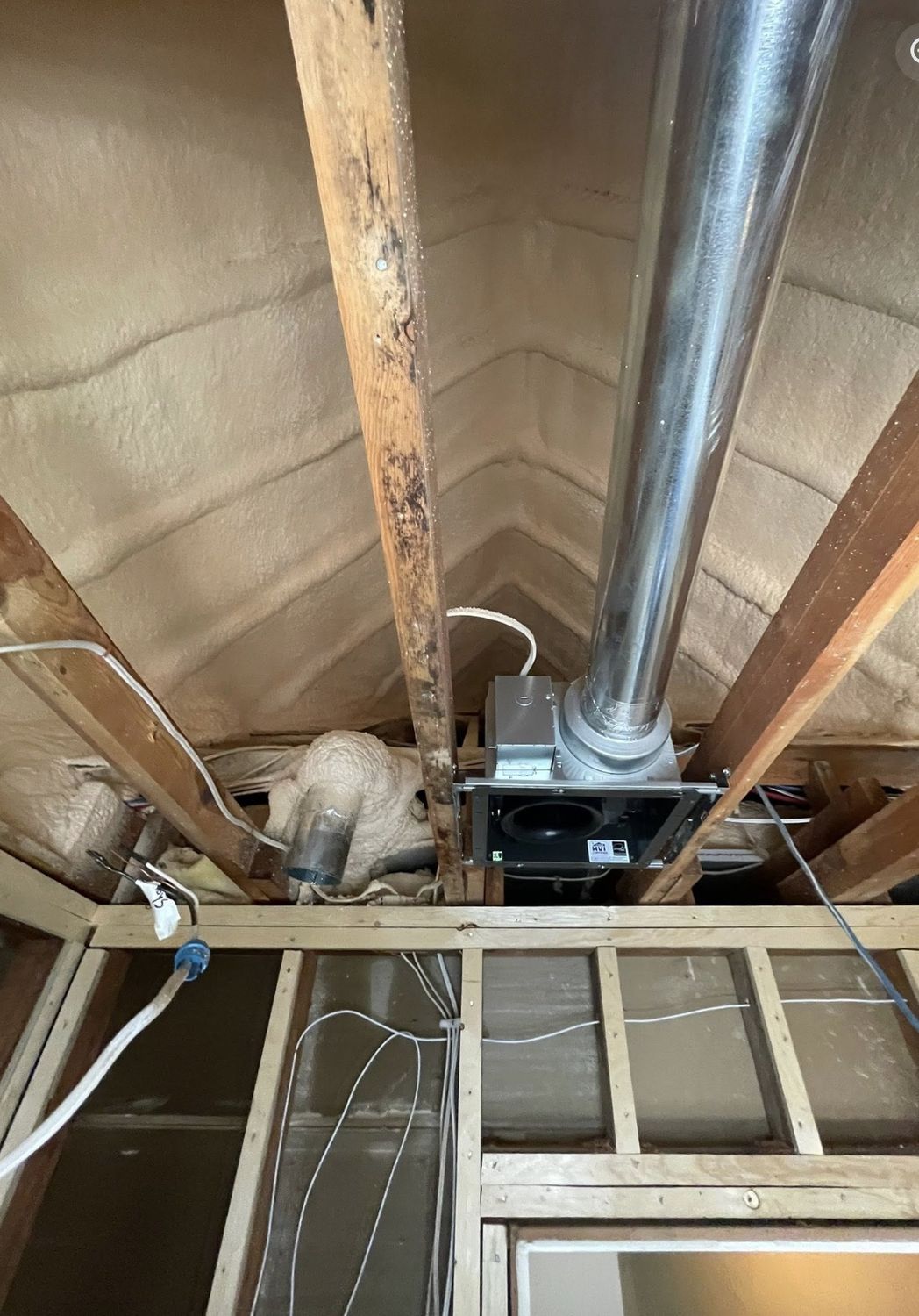
Existing depth and condition, moisture staining, frost marks, ventilation path, every penetration mapped. If we find vermiculite, work stops until it's tested. No exceptions.
Air-seal the ceiling plane
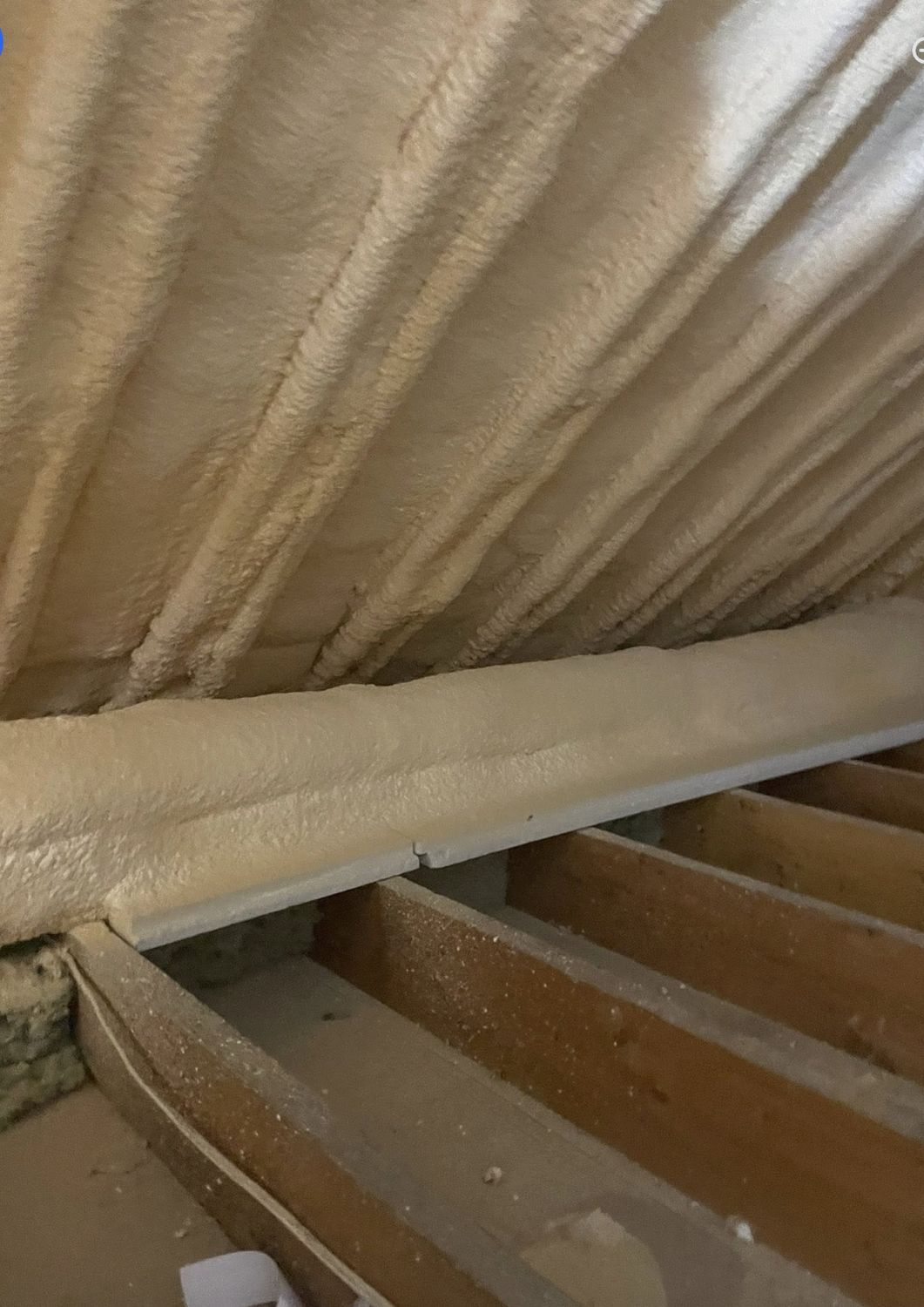
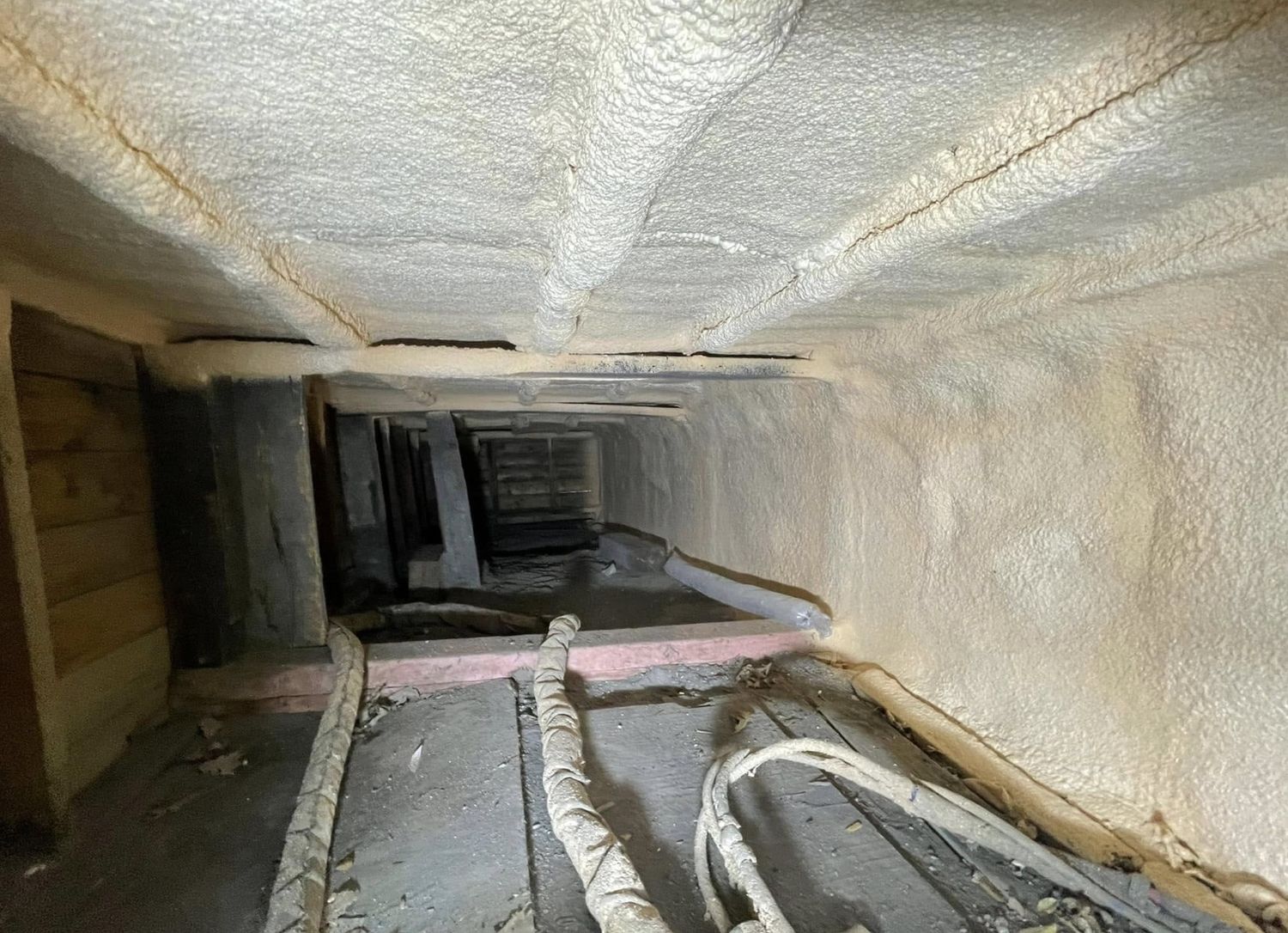
A closed-cell foam pass over penetrations, top plates, pot-light covers and the hatch. It's the highest-value inch of foam in the whole house.
Insulate to target
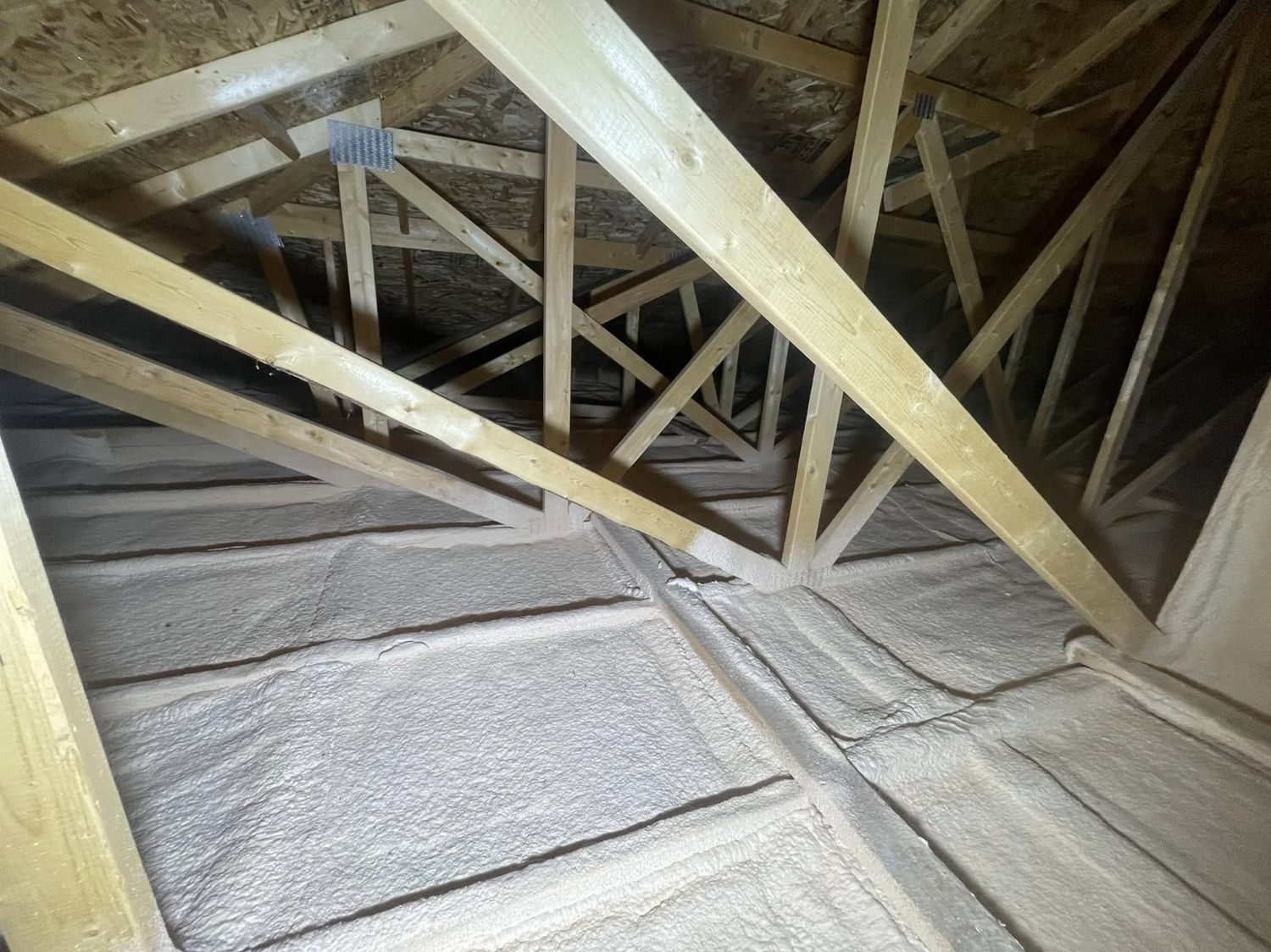
Deep open attics: blown-in top-up to R-50, the economical path. Cathedral ceilings, flat roofs, kneewalls: closed-cell foam at full depth, because there's no room for anything else. Hybrid attics get both, each where it wins.
Protect the ventilation
Baffles at the soffits, clear path to the ridge. Insulation that smothers the soffits recreates the ice-dam problem you paid to remove.
03 Code and money
The targets, and who pays for what
Manitoba's energy code sets the new-construction ceiling target at RSI 8.67 (about R-49 effective) with the HRV Manitoba requires (NBC 2020, 9.36 Tier 1). Retrofits aren't forced to that number, but Efficiency Manitoba's rebate program uses final R-50 as its attic requirement, which makes R-50 the sensible retrofit target too.
The rebate is calculated as $0.03 × ft² × R-value added, capped at the insulation material cost. Worked example: a 1,000 ft² attic upgraded from R-20 to R-50 adds R-30 → $0.03 × 1,000 × 30 = $900. Two conditions people miss: pre-approval before any work starts, and R-values counted from CCMC-verified listings only.
We run the application with you and show gross, rebate and net on the quote. Try the rebate estimator for your own numbers.
| Parameter | Value | Source |
|---|---|---|
| New-build ceiling target (w/ HRV) | RSI 8.67 ≈ R-49 eff. | NBC 2020 9.36 Tier 1 |
| Rebate final attic target | R-50 | efficiencymb.ca |
| Attic rebate rate | $0.03 / ft² / R added | efficiencymb.ca 07/2026 |
| Pre-approval | Required before work | Program condition |
| R-value basis | CCMC-verified only | Program condition |
04 Older homes
Wolseley two-storeys, River Heights cottages, wartime bungalows.
A large share of our attic work is in Winnipeg's pre-1970 housing stock, and it has its own patterns: wood-shavings or early batt insulation settled to a fraction of its rating, knob-and-tube era penetrations never sealed, hatches that leak like an open window, and additions where two roofs meet and neither vents properly. These attics reward the air-seal-first approach more than any others. They're the homes whose icicles you can spot every February.
If your house is one of these, the inspection matters more than the quote. We look before we price.
05 Questions
Attics, answered
What actually causes ice dams?
Attic heat melting the roof snow from below; meltwater refreezing at the cold eaves. The heat arrives mostly by air leakage through the ceiling plane, which is why sealing the plane comes before adding insulation. More insulation over a leaky ceiling treats the symptom.
What R-value does my attic need?
Aim for R-50: it's Efficiency Manitoba's rebate requirement for top-ups and effectively matches the new-build code target (RSI 8.67 ≈ R-49 effective with HRV, NBC 2020 9.36 Tier 1).
Sources: efficiencymb.ca · NBC 2020 Table 9.36.2.6
Spray foam or blown-in for the attic?
Usually both: foam to air-seal the plane (1–2 inches over penetrations), blown-in to reach R-50 economically. Full-depth foam is for cathedral ceilings, flat roofs and kneewalls where loose fill can't go. A contractor who quotes full-depth foam for a deep open attic without discussing the hybrid isn't optimizing for you.
How much does it cost?
Priced per attic: area, existing depth, sealing scope and access all matter. The rebate pays $0.03/ft² per R added (our 1,000 ft², R-20→R-50 example earns $900). The quote shows gross, rebate and net.
Can you top up over the old insulation?
If it's dry and sound, usually yes. It comes out when there's moisture damage or mould, when it's vermiculite (asbestos testing first), or when the whole point is sealing the plane beneath it. The inspection decides.
Book the attic inspection first.
We look, measure and map the leaks, then quote in writing with the rebate shown.