Core · 2lb
Closed-Cell Spray Foam
Grizzly Gold HFO medium-density foam: verified R-11.1 at 2 inches, vapour barrier at that same thickness, air barrier at 1 inch. The workhorse for Manitoba assemblies.
Winnipeg, Manitoba · Climate Zone 7A
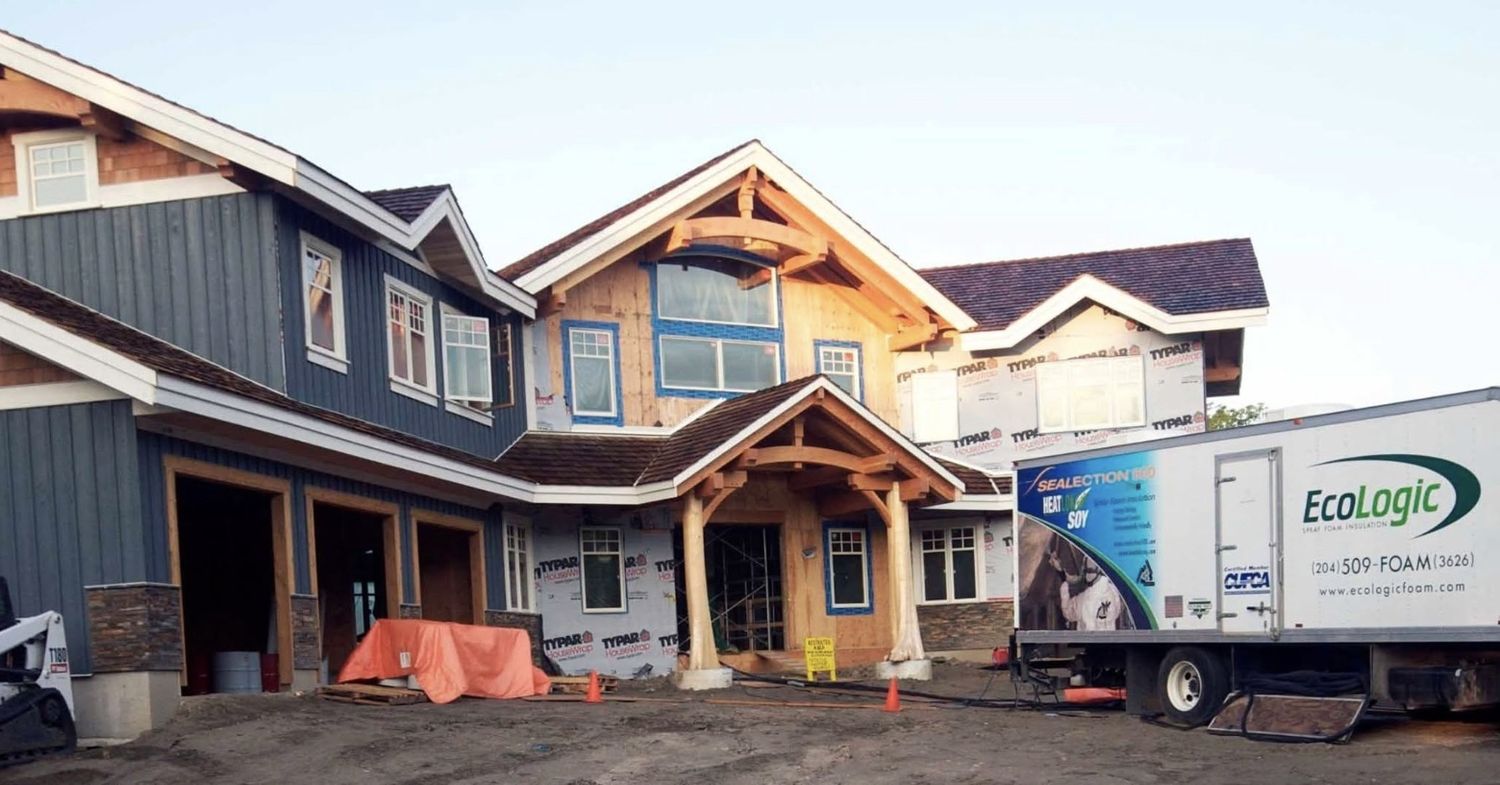
Ecologic installs Canadian-made 2lb closed-cell spray foam across Winnipeg and all of Manitoba: homes, cottages, farms, and commercial buildings. Every figure we publish is the tested one: the R-value from the CCMC listing, the rebate rates from Efficiency Manitoba's current program, the installation standard from CAN/ULC-S705.2. If we can't cite it, we don't claim it.
Verified LTTR of our 2lb closed-cell foam at the 2-inch vapour-barrier thickness, under the current test method.
CCMC 14133-L · S770-15
Designed for Winnipeg's climate zone 7A and its 5,670 heating degree-days.
NBC climatic data
Global warming potential of the HFO blowing agent in the foam we spray: GWP of 1 per the manufacturer's 2024 TDS, versus ≈ 1,030 for the old HFC generation.
ECCC HFC phase-out, 2021
Listed time-to-occupancy for retrofit installs with required ventilation.
CCMC 14133-L · CAN/ULC-S705.2
01 What we install
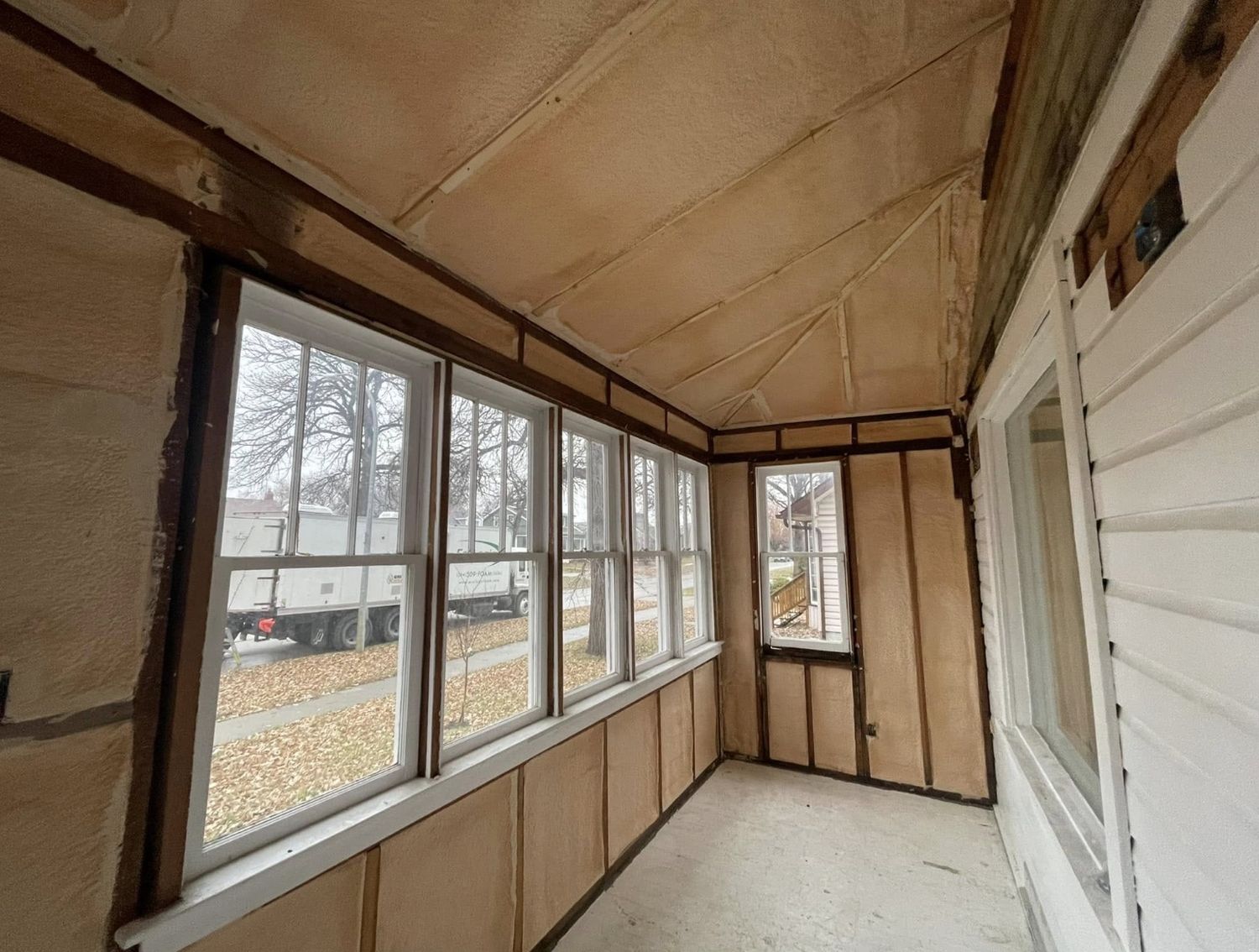
Closed-cell spray foam is insulation, air barrier and vapour barrier in a single 2-inch application. That makes it the right answer for some assemblies and the wrong answer for others. We'll tell you which is which.
Core · 2lb
Grizzly Gold HFO medium-density foam: verified R-11.1 at 2 inches, vapour barrier at that same thickness, air barrier at 1 inch. The workhorse for Manitoba assemblies.
Residential
Air-seal the attic plane, stop the ice dams, and hit the R-value the code and the rebate program actually require.
Residential
Winnipeg basements sit in expansive Red River clay. Closed-cell handles the moisture the batts-and-poly approach can't.
Residential
Cold floors, frozen pipes, unheated slabs — sealed and insulated.
Cottage
Three-season to four-season conversions across Whiteshell, Interlake and Lake Winnipeg cottage country.
Agricultural / Commercial
Condensation control on cold steel, 3lb spray-applied roofing, fireproofing and coatings, radon gas barriers.
02 The verified-number promise
Insulation marketing is full of loose numbers: "up to R-7," aged values, initial values, derived values. Efficiency Manitoba doesn't accept any of them: rebates are calculated only on long-term thermal resistance (LTTR) values published in a CCMC listing, tested under CAN/ULC-S770.
So those are the numbers we lead with. The foam we install is Grizzly Gold 2lb closed-cell, made by CUSE (Waterloo, Ontario) at its Brantford plant. It carries a verified LTTR of R-11.1 at the 2-inch vapour-barrier thickness, and the full ladder is R-5.3 at 1 inch, R-11.1 at 2, R-17.5 at 3, R-24.1 at 4, third-party tested to CAN/ULC-S770-15. At 2 inches it also qualifies as your vapour barrier (water-vapour permeance of 39 ng/(Pa·s·m²), the CCMC design value, well under the 60 the code requires; and that's measured on cores with the skins removed, so the installed foam runs lower), and it's an air barrier from 1 inch.
Three functions from one application, and every figure traces back to the listing.
| Property | Verified value | Source |
|---|---|---|
| LTTR (50 mm / 2 in) | R-11.1 (RSI 1.92) | CCMC 14133-L · S770-15 |
| LTTR ladder (1 / 2 / 3 / 4 in) | R-5.3 · R-11.1 · R-17.5 · R-24.1 | 2024 TDS, S770-15 |
| Vapour permeance (50 mm) | 39 ng/(Pa·s·m²) design value | CCMC 14133-L |
| Code vapour-barrier limit | ≤ 60 ng/(Pa·s·m²) | NBC 9.25 |
| Time-to-occupancy (retrofit) | 25 hours | CCMC 14133-L |
| Material standard | CAN/ULC-S705.1 | Listing basis |
| Installation standard | CAN/ULC-S705.2 | Every job |
03 Certified installation, explained
When spray foam goes wrong (fishy smells, foam that never cures), the cause is off-ratio spraying, a workmanship failure rather than a fault in the material. Canada built a quality-assurance system specifically to prevent it. Most homeowners have never heard of it. Here's how it works on your job.
CUFCA-certified installers carry annually renewed photo ID and can lose their licence for bad work. Ask to see the card. Any good contractor will show it before you ask.
The CAN/ULC-S705.2 installation standard requires the installer to test adhesion, cohesion and core density on site, every day, with approved kits, and to log substrate temperatures and pass thicknesses in a daily work record.
CUFCA runs independent spot surveillance on certified installers, with mandatory inspection on large jobs. The paper trail exists whether or not anyone asks for it.
You get the installation record. If you ever sell the house, that documentation is the difference between "spray foam, certified install, here's the file" and a question mark in your inspection report.
04 The rebate navigator
Efficiency Manitoba's Home Insulation Rebate currently pays $0.03 per ft² per R-value added for attics and $0.06 per ft² per R-value added for wall cavities and foundation walls, up to the cost of the insulation material. Two things most homeowners find out too late:
Pre-approval is required before work starts. Book the job first and the rebate is gone. We handle the application with you before anything gets sprayed.
Only CCMC-verified R-values count. The program explicitly rejects manufacturers' declared or marketing values. Our foam's listing is the paperwork: R-11.1 at 2 inches (RSI 1.92), on file.
Income-qualified households may also be eligible for the Energy Efficiency Assistance Program, which can cover insulation costs entirely. Manitoba was the first province to sign a Canada Greener Homes Affordability co-delivery agreement (September 2025). Ask us; we'll point you to the right program before quoting.
05 Why "Ecologic"
For years, spray foam's dirty secret was its blowing agent: HFC gases with a global warming potential of roughly 1,030× that of CO₂. Canada prohibited manufacturing foam with HFC blowing agents as of January 1, 2021. The foam we install uses a next-generation HFO blowing agent with a GWP of 1 per the manufacturer's 2024 TDS, a reduction of roughly 99.9%, and it's made in Ontario.
We'll also tell you the rest: foam is petroleum-derived, it's effectively permanent, and removal is miserable. For most Manitoba buildings the energy it saves repays its footprint many times over. That calculation is honest, and honest calculations are the only kind we publish.
Blowing agent, then vs now
| HFC-245fa (old generation) | GWP ≈ 1,030 |
| HFO (what we spray) | GWP 1 |
| HFC foam manufacture in Canada | Prohibited since 2021 |
Sources: ECCC HFC phase-down regulations; ACS C&EN blowing-agent chemistry coverage.
06 Straight answers
Professionally installed closed-cell foam in Prairie markets typically runs about $1.35–$2.50 per board foot (a square foot at one inch thick); national 2026 surveys report up to $5 for small or complex jobs. Your real number depends on area, thickness, access and season, which is why we quote in writing from measurements, with the R-value math and the rebate estimate shown on the quote.
R-11.1 at the 2-inch vapour-barrier thickness, long-term. The full tested ladder: R-5.3 at 1 inch, R-11.1 at 2, R-17.5 at 3, R-24.1 at 4, third-party tested to CAN/ULC-S770-15, on CCMC listing 14133-L and the manufacturer's 2024 TDS. Those are the LTTR figures Efficiency Manitoba accepts, not marketing values.
Source: CCMC 14133-L · 2024 TDS (CAN/ULC-S770-15 test method)
The CCMC listing for our foam specifies 25 hours time-to-occupancy for retrofit work with the ventilation the installation standard requires. We seal off and ventilate the work area, and the re-entry time goes in writing on every job.
Source: CCMC 14133-L · CAN/ULC-S705.2
Cured closed-cell foam is inert. The documented failures (persistent fishy odours, foam that stays soft) are off-ratio installations: a workmanship failure the CUFCA system (certified installers, daily testing, third-party audits, written records) exists to prevent. The single best thing a homeowner can do is ask for the installer's CUFCA photo ID and the daily work record. We provide both without being asked.
Yes, and the order matters: pre-approval must be in place before work begins. We run the application with you, calculate the rebate on the CCMC-verified R-values, and build the net cost into your quote.
Rates verified July 2026: efficiencymb.ca Home Insulation Rebate
The mortgage stories you may have read are a UK problem: unregulated foam sprayed on roof undersides with no standards regime. Canada is different: material standard (CAN/ULC-S705.1), installation standard (S705.2), national product listings (CCMC) and a certification body (CUFCA). A documented, certified install with its paperwork on file is a selling feature. Keep the records we give you.
07 Where we work
City jobs, cottage country and the ag belt: Winnipeg and the Perimeter, Steinbach, Selkirk and the Interlake, Winkler–Morden, Portage la Prairie, Brandon, and lake country from the Whiteshell to Gimli. If you're further out, call anyway. We've sprayed in most corners of this province.
Measurements, R-values, rebate estimate, re-entry time. On paper, before you commit.